Light & Exposure
Window Light: Your Free Studio Assistant
Read direction, size, distance, and spill so an ordinary window starts pulling its weight on portrait day.
 FIELD NOTE / Light & Exposure
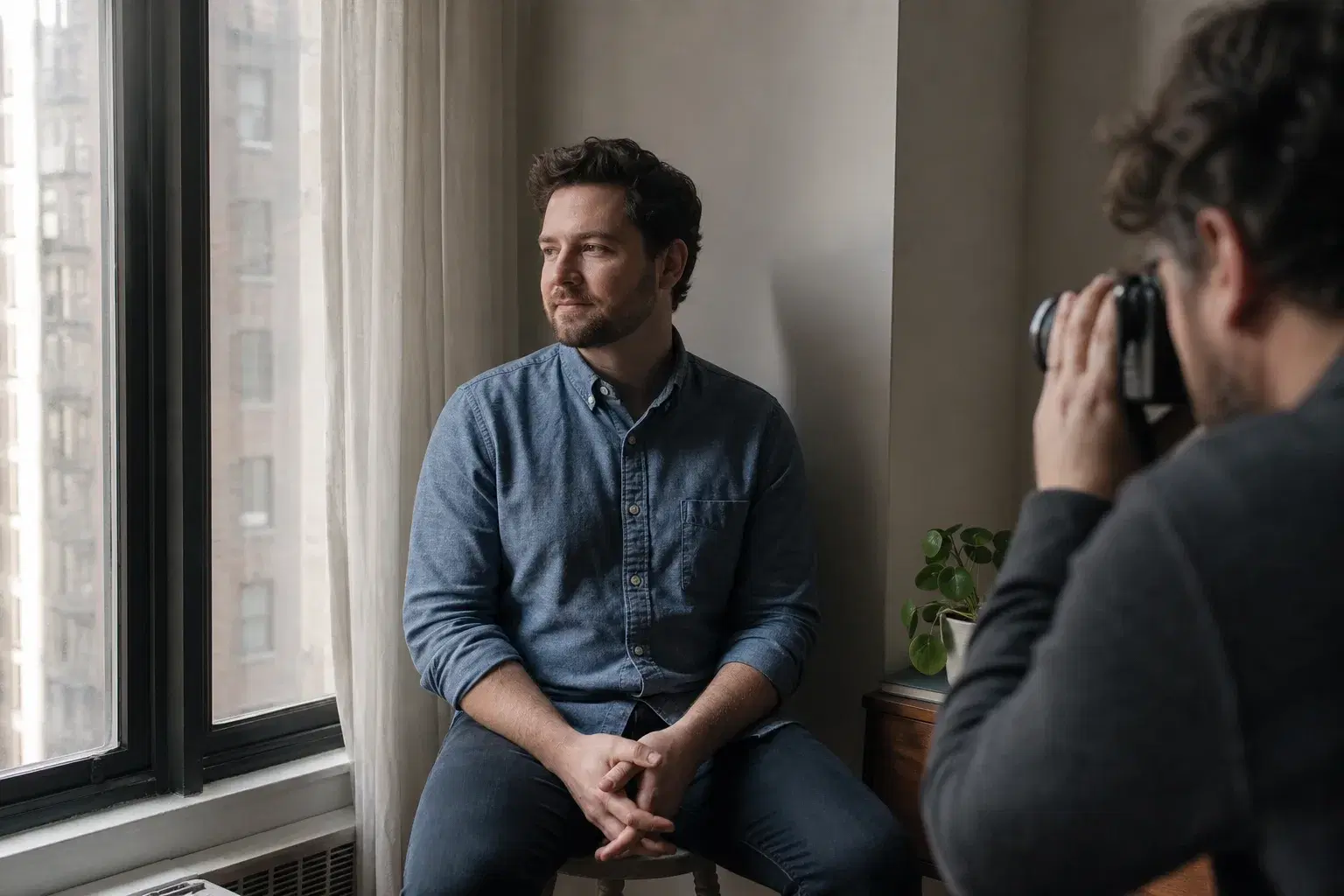
A window is not automatically soft light, no matter what social media says. Its usefulness depends on its size, direction, distance from the subject, and what surrounds it. Read those four clues and an ordinary window can become a very capable studio assistant—without sending an invoice.
Let the window have the room
Mixed ceiling lights can add orange or green color and create conflicting shadows. Turn them off briefly so you can see what the window is actually doing. If the room becomes too dark, decide whether the overhead light adds something useful or is just making color correction grumpy.
Watch where the light is going
Place the subject beside the window for shape, not directly in front of it by default. Rotate the face slowly toward and away from the light. Watch the shadow from the nose and the catchlights in the eyes.
Front light is open and forgiving. Side light creates dimension. Backlight can feel airy, but it may require careful exposure or a reflector. None is universally best; each tells a different story about the same face.
Softness is a distance game
Relative size controls softness. A window appears larger relative to a subject who is close to it, producing softer shadow transitions. Move the subject farther away and the source becomes relatively smaller, making shadows more defined while its intensity drops quickly.
Sheer curtains soften direct sun. A white wall opposite the window can return gentle fill. Dark curtains or a black jacket outside the frame can deepen shadow when the room feels too flat.
Give the background its own job
Once the face looks good, check the background. Move the subject, camera, or both to remove bright distractions. A tiny camera shift can place a clean wall behind the head while keeping the same light. Small move, suspiciously large reward.
Expose for the skin highlight you want to preserve. If the window itself clips to white but is not part of the story, that may be an acceptable choice.
The two-minute window test
- Turn off overhead lights.
- Place the subject one arm’s length from the window.
- Rotate them until both eyes hold light.
- Make one frame from the shadow side and one from the lit side.
- Move the background into order.
The room does not need to be beautiful. It needs one useful direction of light, a deliberate frame, and maybe that laundry basket moved six inches to the left.