Posing & Direction
Pose People Without the Awkward Energy
Use clear prompts, a little movement, and small adjustments to make portraits feel natural—not manufactured.
 FIELD NOTE / Posing & Direction
Natural-looking portraits are rarely unposed. They are directed clearly enough that people can stop wondering what to do with every limb and return their attention to each other.
Build the pose one layer at a time
Start broad, then refine.
- Place the feet. Give each person a clear mark and direction.
- Shape the body. Turn hips or shoulders to create connection and separation.
- Give the eyes and hands a job. Ask for a gaze, touch, or small movement.
Trying to correct ten details at once makes people feel like they are failing a surprise exam. Change one visible thing, affirm it, and keep moving.
Give people verbs, not vibes
“Be natural” sounds nice but is nearly impossible to perform on command. A small action is easier.
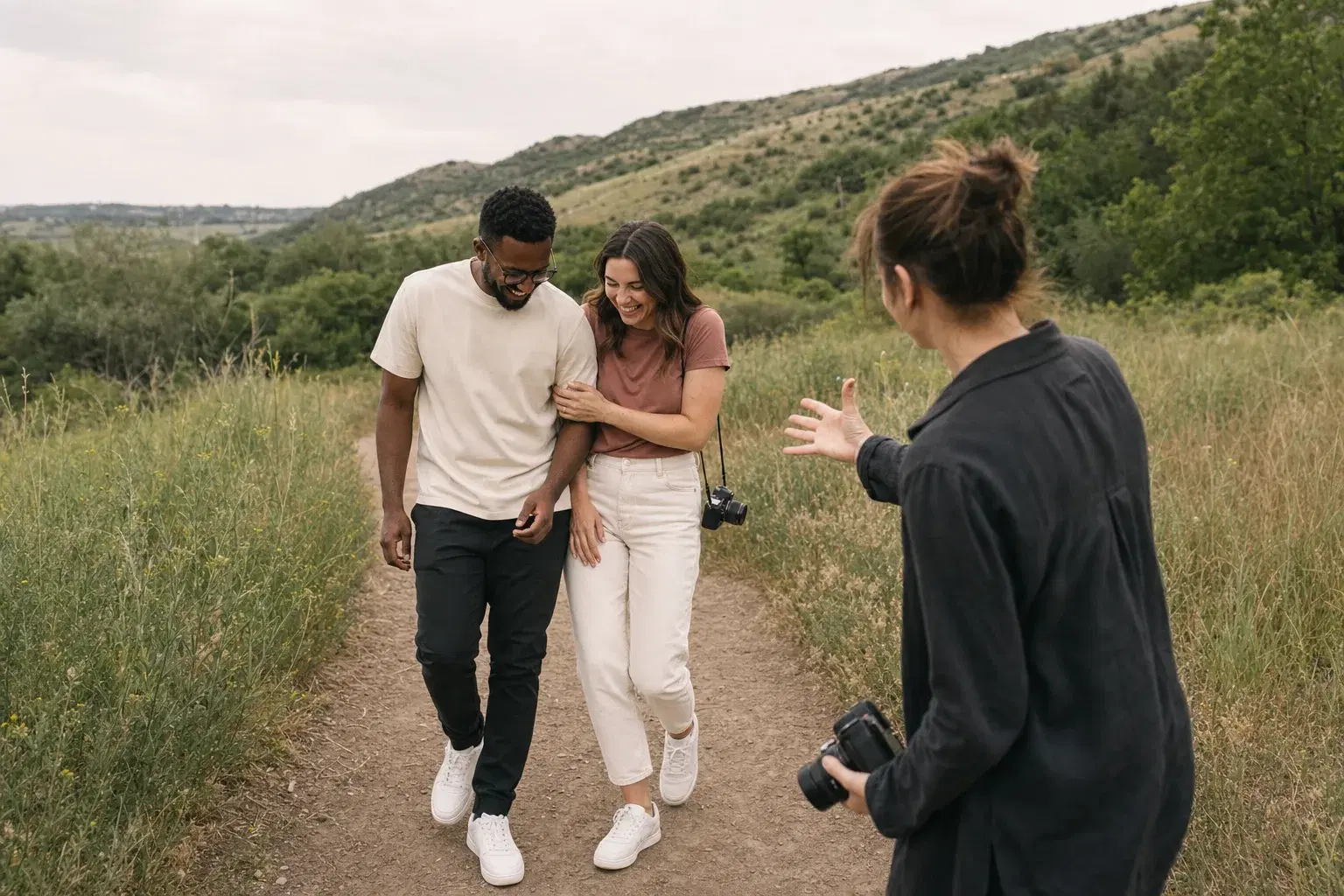
- Walk toward me slowly and bump shoulders every few steps.
- Put your hand in their pocket and pull them half a step closer.
- Look at each other, then both look at me on three.
- Take one deep breath and let your shoulders fall.
Prompts should fit the people in front of you. Quiet clients may respond to stillness and specific hand placement. Expressive clients may prefer movement. Read the room; do not force every couple into the same internet-famous prompt.
Make peace with hands
Hands, elbows, and feet can feel awkward when they are cropped at joints or pressed flat against the body. Leave a little space between arms and torso, soften fingers, and crop with intention. Hands do not need to disappear; they just need a believable job.
For seated portraits, bring people slightly forward rather than letting them collapse into the chair. Ask them to lengthen through the top of the head, then relax the shoulders.
Create connection without adding cheese
Connection can be eye contact, shared direction, mirrored posture, or a hand resting with purpose. Not every couple needs to touch foreheads. Not every family needs to laugh at an invisible joke.
Give a simple setup, observe what happens between instructions, and photograph the transition. The frame after the prompt often feels more honest than the prompt itself.
Keep a rescue sequence in your pocket
When energy stalls, use a sequence you know by heart:
- Everyone looks at the camera.
- Everyone looks at one person.
- That person looks back at someone else.
- Add a small movement or squeeze.
- Reset and photograph the exhale.
The sequence creates variety while the overall arrangement stays stable. Your subjects feel progress, and you get your brain space back for expression, light, and composition.