Gear Reviews
50mm vs. 85mm: Let Your Feet Decide
A field-first comparison of two portrait favorites, including working distance, angle of view, background rendering, and versatility.
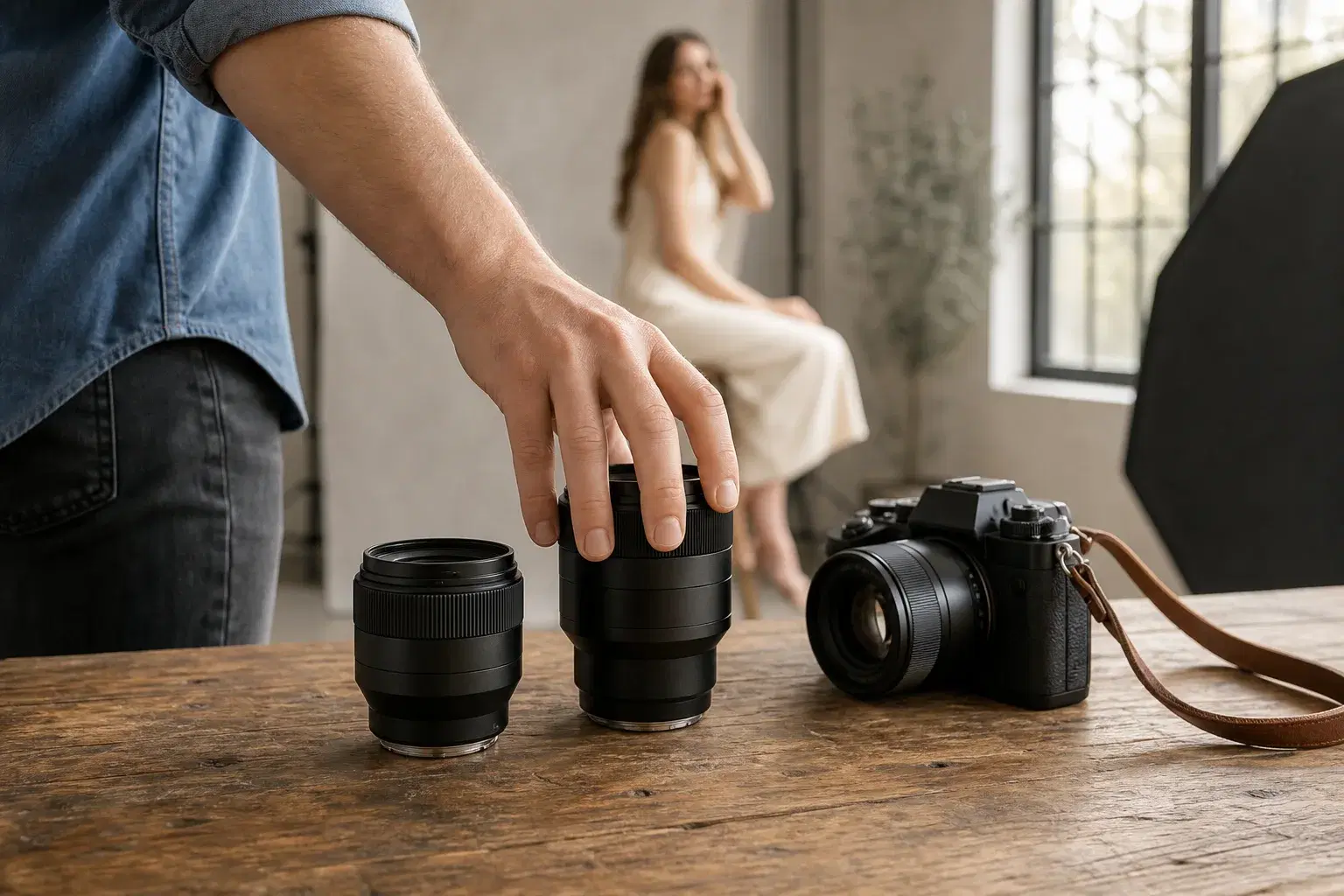 FIELD NOTE / Gear Reviews
The internet can turn 50mm versus 85mm into a cage match. In real life, both are excellent portrait focal lengths. The better choice depends less on microscopic sharpness scores and more on your working distance, your location, and what you want the background to do.
Same job, different dance floor
A 50mm gives a wider sense of place and lets you work closer without losing the environment. An 85mm has a narrower angle of view, so matching the same framing usually means standing farther back. That greater camera-to-subject distance changes perspective—often described as “compression”—and makes it easier to simplify a busy background.
| Consideration | 50mm | 85mm |
|---|---|---|
| Working distance | Conversational and close | More space from the subject |
| Small rooms | Easier to use | Can feel too tight |
| Background | Includes more context | Easier to simplify |
| Groups | More flexible | Best with extra room |
| Candid moments | Immersive | Observational |
When 50mm is the friendly choice
Choose 50mm when the location matters to the story, when you are photographing in a home or tight room, or when you want to move between portraits and groups without changing lenses. It is the lens most likely to let your back remain friends with the wall.
At very close distances, faces near the edge of the frame can stretch. Step back slightly and avoid placing important faces at the far corners.
When 85mm brings the calm
Choose 85mm when you have room to step back, want a calmer background, or prefer giving subjects more personal space. It is especially useful for head-and-shoulders portraits, ceremonies, and candid coverage from the edge of a moment.
The longer working distance can make verbal direction harder in noisy environments. It can also make a small studio feel smaller.
Do not buy aperture by the decimal
Both focal lengths are sold in fast versions, but maximum aperture is only part of the result. At close portrait distances, f/1.4 or f/1.8 can leave one eye—or one entire person—soft. Compare focus consistency, handling, autofocus behavior, flare, and weight alongside the delicious background blur.
The verdict: your feet get a vote
For one-lens versatility, 50mm is the safer first choice. For dedicated portraits with room to work, 85mm creates separation with less effort. Many photographers eventually use both because each lens encourages a different way of standing inside the scene.
Before buying, rent or borrow each lens for a real session. Notice where your feet land, how often you meet a wall, and whether your voice still reaches the subject. Your body will give you a more useful review than a laboratory chart.